
Every minute a vehicle sits at the dock erodes margin. Manual handling slows the flow, tires workers, and creates quality risks. A modern loading unloading conveyor changes that equation by bridging the gap between vehicle and warehouse floor, turning stop-and-go tasks into a smooth, repeatable transfer of cartons, parcels, sacks, and even irregular goods. With e‑commerce volatility, cross-border shipping peaks, and tighter delivery promises, operations teams need speed that does not compromise safety or accuracy. Purpose-built conveyors deliver just that—high throughput with fewer bottlenecks, predictable cycle times, and a safer, more ergonomic working environment for dock teams.
In markets from express parcel hubs to industrial plants and bonded cross-border warehouses, the right conveyor reduces vehicle dwell time, maximizes dock utilization, and keeps upstream sortation or production lines fed at a steady rate. Forward-looking manufacturers—especially those with strong R&D roots in logistics equipment—now combine robust mechanical design with smart controls, making it easier to integrate conveyors into scanners, WMS/WCS platforms, and automated storage. The result is a scalable, data-rich dock that adapts to seasonality without ballooning labor costs.
What a Loading Unloading Conveyor Does—and Why It Matters Now
A loading unloading conveyor is engineered to move goods directly between trailers, containers, vans, or railcars and the warehouse floor. Instead of relying on manual carry steps, workers position the conveyor’s boom inside the vehicle and let powered belts or rollers do the heavy lifting. Options include telescopic belt conveyors that extend multiple stages into the vehicle, flexible “accordion” conveyors that curve and snake around obstacles, and mobile truck loaders with elevation control for different bed heights. This family of equipment is designed to work where the job is hardest: at the last few meters where space is tight, temperatures swing, and packages vary widely in size.
The business case is compelling. By converting bursts of manual movement into a consistent flow, facilities raise picks-per-labor-hour, reduce ergonomic strain, and compress turnaround times at the dock. In express delivery operations, a conveyor keeps parcel streams steady for downstream sorters or dimensioning stations. In warehousing and cross-border logistics, it reduces staging clutter and frees valuable floor space because product moves straight from vehicle to the next process. In industrial loading and unloading, especially with repetitive SKUs, the conveyor’s repeatability improves quality checks and count accuracy.
Equally important is digital readiness. Modern units feature variable speed drives, photoeye sensing for zero-pressure accumulation, and PLC/HMI interfaces for smart control. That means auto-restart after line clear, jam detection, and interlocks that prevent unsafe extension. When connected to WMS/WCS, teams can match conveyor speed to scan rate or to the capacity of a pick line. Add-on lights, fans, and integrated operator platforms make long shifts safer and more comfortable. Explore models of loading unloading conveyor to see how telescopic booms, flexible sections, and mobile bases can be configured for your dock layout and SKU mix.
Finally, the timing is right. With parcel volumes swinging between promotional peaks and quieter periods, conveyors let you throttle capacity without wholesale staff expansions. Leading innovators in Asia and beyond have raised the bar on robustness and maintainability, proving these systems in demanding express, warehousing, and cross-border environments where reliability across long shifts and varied package types is non-negotiable.
Key Features, Options, and Specifications to Compare Before You Buy
Not all conveyors are equal—and a high-fit selection begins with understanding the loads, the vehicle mix, and the dock environment. Start with structure and capacity: telescopic belt models list extension length (e.g., 10–18 m), number of stages, belt width (typically 600–1000 mm), and load per linear meter. If you’re moving irregulars or mixed parcels, look for higher-friction belt surfaces and side guides. For flow-intensive parcel operations, powered roller designs with zero-pressure accumulation reduce contact and scuffing. Speed ranges matter too; variable frequency drives enable smooth acceleration and deceleration to protect goods and workers while matching upstream pace.
Controls and safety features separate professional-grade systems from commodity units. Standard inclusions should be emergency stops at operator touchpoints, anti-pinch guarding around telescopic joints, audible/visual alerts during boom motion, auto-stop on obstruction, and interlocks with dock doors or restraints. An intuitive HMI, pendant, or wireless remote helps operators fine-tune speed, direction, and extension. Look for auto-indexing to “follow the load” deeper into a trailer as parcels accumulate, hands-free reversing for unloads, and programmable dwell limits. Lighting on the boom improves visibility inside dark trailers, while cooling fans enhance comfort in hot climates.
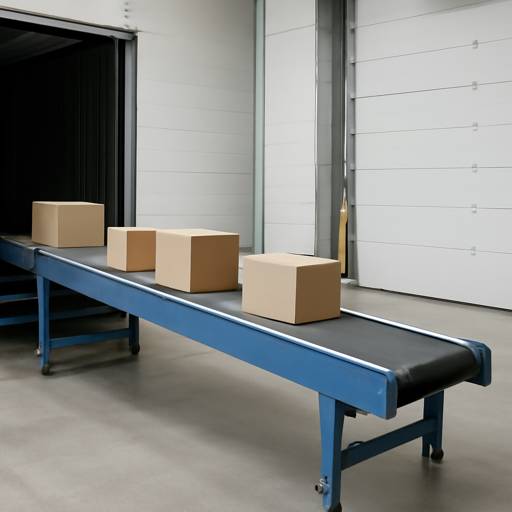
Adaptability protects ROI as product mixes evolve. Height adjustment via hydraulic or electric lift accommodates different vehicle bed heights and allows gentle incline/decline to reduce sliding. Flexible (concertina) conveyors add curves and are ideal for seasonal overflow lanes or to bridge irregular distances to induction points. Mobile bases with heavy-duty casters and tow bars enable one unit to serve multiple doors. If you handle high-variation, cross-border parcels, consider integrated in-motion weighing, barcode scanning, and dimensioning mounts at the head or tail of the loading unloading conveyor to capture data without extra touches.
Durability and maintainability determine total cost of ownership. Specify welded steel frames with anti-corrosion coatings for humid or coastal regions, sealed bearings for dusty environments, and IP-rated controls. Quick-change belts, modular rollers, and accessible wear parts cut downtime. Remote diagnostics, sensor health checks, and condition-based alerts help maintenance teams plan interventions before breakdowns. Ask about spare parts kits, global service networks, and compliance with CE/UL, machine safety standards, and OSHA best practices. Energy matters, too: high-efficiency motors, regenerative braking on declines, and intelligent sleep modes shrink operating costs across long shifts.
Above all, choose a partner that engineers to your reality. A provider with deep logistics know-how—serving express delivery hubs, warehouses, and industrial docks—can tailor boom geometry, belt materials, guarding, and controls to your KPIs. That means the conveyor fits your dock locations, scan positions, labeling workflows, and buffer strategy rather than forcing process compromises that show up later as hidden costs.
Deployment Scenarios, ROI Proof Points, and Best Practices from the Dock
Consider a parcel hub with eight doors feeding a regional sort. Before automation, two to three associates per door formed human chains to unload trailers during peak arrivals. By installing telescopic belt conveyors with auto-indexing and pendant controls, the site reduced unload teams to one operator per door plus a floater for exceptions. Vehicle dwell time dropped from 68 minutes to 42 minutes, while carton damage from drops and scuffs declined measurably. Because flow became more predictable, the sortation system ran closer to its design rate with fewer “starve” events. Across a month, the hub processed 20–25% more volume with the same headcount, and safety reports showed fewer musculoskeletal complaints.
Now picture a cross-border e‑commerce facility facing intense volume spikes around Singles’ Day and Black Friday. Management deployed a hybrid approach: telescopic conveyors at primary doors and flexible powered roller conveyors for overflow lanes. During peaks, flexible units were rolled into temporary staging areas to absorb surges; in off-peak weeks, they nested compactly to free floor space. Operators used scan-and-weigh stations mounted at the conveyor tail to capture shipment data on the fly, reducing touches. Even with large SKU variability, the system maintained a steady cadence, keeping the WMS updated and cycle counts clean. Payback arrived in roughly 12–14 months from lower labor overtime, faster turnarounds, and reduced detention fees.
In a manufacturing outbound dock shipping boxed components and odd-shaped assemblies, a different specification won. A robust loading unloading conveyor with wider belts, reinforced side guides, and a powered elevation section handled heavier loads without jamming. The conveyor interfaced with palletizing stations; mixed-case boxes traveled to the trailer while heavier items moved via a parallel roller lane. Interlocks ensured that if one lane paused, the other slowed to prevent pileups at the dock throat. The plant saw a 30–40% increase in truck fill-rate consistency and fewer end-of-shift rushes, translating into more predictable carrier pickups and happier downstream customers.
Across these scenarios, implementation discipline determines success. Start with a data-backed assessment: door-by-door arrival patterns, average and peak cartons-per-hour, package dimensions and weights, and ergonomic pain points. Design the conveyor layout to match true flows—not idealized ones—including reserves for surge buffers, exception handling, and reverse flow for returns. Run a pilot at one or two doors, collect KPI baselines, and tune conveyor speed, boom extension logic, and scan station placement. Train operators on control panels, lockout/tagout, and ergonomic best practices, pairing classroom time with supervised shifts. Document daily start-up checks and a preventive maintenance plan aligned to your runtime profile.
Focus on integration. Tie conveyor controls to dock door sensors and vehicle restraints for safety; link to WMS/WCS for event-driven behavior (e.g., slow when the pack line saturates). Add visual management—lane beacons and HMI dashboards—to signal status at a glance. For seasonality, plan a “capacity ladder”: permanent telescopic units for base load, plus flexible conveyors and mobile units for peak. As sustainability pressures grow, prioritize energy-saving drives, auto-sleep, and low-noise components; the quiet, cool dock is also a safer one. Finally, partner with a manufacturer that combines mechanical reliability with responsive support. Innovators grounded in logistics R&D—serving express, warehousing, cross-border, and industrial users—bring proven designs, fast spare parts, and field experience that cuts risk and accelerates ROI.
Done right, the dock stops being a constraint and becomes a high-velocity bridge between transport and operations. The capabilities are proven, the economics are favorable, and the path is clear: match the conveyor to the job, integrate it intelligently, and scale with confidence as demand shifts.
