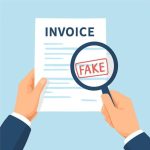
Every day, people hand over money, personal data, and trust to businesses they have never physically seen. Some of those companies are exactly what they claim to be. Others are carefully disguised operations built to extract as much value as possible before disappearing. The difference is rarely obvious from a logo, a polished landing page, or a promotional video. In an environment where design tools, fake reviews, and paid advertisements are cheap and widely available, the only real safety net is a structured scam or legit check that goes deeper than the surface.
Most consumers still judge a business by how it presents itself. A clean website, active social media profiles, and a listed customer support number create a sense of legitimacy. However, fraudsters have learned to replicate these signals with remarkable accuracy. They buy professional templates, rent virtual offices, use stock photos of “team members,” and flood search results with sponsored content. This means that looking legitimate is no longer the same as being legitimate. A meaningful scam or legit check has to test those claims against independent sources, user complaints, legal records, and behavioral patterns that are much harder to fake.
Why a Scam or Legit Check Must Go Beyond Testimonials and Advertising
A business can control almost everything it publishes about itself. Advertisements, website copy, social media posts, and curated testimonials are all part of a managed narrative. Even third-party review sections can be manipulated through paid reviewers, review exchanges, or suppression tactics. That is why a genuine Scam or legit check should never rely on one website, one review page, or one conversation with a sales representative. It should compare multiple signals and look for contradictions between what a company says and what independent data reveals.
One of the most important reasons to go beyond marketing material is that fraud often hides in the gaps. A company may claim to have been in business for ten years, while its domain was registered six months ago. It may advertise an address that turns out to be a virtual mailbox. It may display testimonials from people whose photos appear on stock image sites. These inconsistencies are not always obvious, but they become visible when you search for the business name alongside terms like “complaints,”“scam,”“refund,” or “lawsuit.” A structured scam or legit check treats every claim as a question rather than a fact.
Reputation research platforms that aggregate reviews, complaints, news mentions, social media discussions, and legal filings are especially useful at this stage. Instead of asking the company whether it is trustworthy, you look at the trail it has already left across the internet. A pattern of unresolved disputes, hidden fees, or misleading advertising often emerges quickly. Even when no single complaint proves fraud, a cluster of similar complaints from different customers can reveal a business model built on pressure, confusion, or broken promises. That kind of context is rarely visible in a carefully edited marketing campaign.
Consumers should also avoid treating a lack of negative information as proof of legitimacy. New companies may have no complaints because they have not been active long enough to accumulate them. Scam operations may change names frequently specifically to escape a damaged reputation. Therefore, a scam or legit check is not just about finding red flags. It is also about asking whether enough independent history exists to justify trust. If a company cannot be verified through public records, customer experiences, or consistent business behavior, caution is warranted even if its website looks impressive.
Common Red Flags a Scam or Legit Check Can Uncover
Many scams follow familiar patterns, and those patterns appear across industries, countries, and platforms. Recognizing them early can save you from financial loss. One of the most common warning signs is aggressive urgency. Fraudulent businesses often pressure people to act immediately, claiming that a discount, investment opportunity, or limited stock will disappear within hours. This tactic is designed to push buyers past their normal judgment. A legitimate company can afford to let you read terms, compare prices, and verify its background before you commit.
Another red flag involves payment methods that are difficult to trace or reverse. Requests for wire transfers, cryptocurrency, gift cards, or payment through personal accounts should trigger an immediate scam or legit check. These methods offer little or no buyer protection once the money is sent. Legitimate merchants and service providers generally offer standard payment channels with clear receipts, refund policies, and dispute procedures. When a seller insists on unconventional payment methods, the reason is often that they know chargebacks or fraud complaints could expose their operation.
Unverifiable contact information is another signal. A business that lists only a contact form, an email address, or a phone number with no physical location may be hiding its identity. Even when an address is provided, it is worth checking whether the location is real, whether the company is registered there, and whether the address appears in public business records or only in promotional material. A detailed scam or legit check often involves searching the address online, checking local business registries, and looking for consistency across directories. If the same address is linked to multiple unrelated businesses, that can indicate a shell operation.
Review patterns can also reveal manipulation. A profile with hundreds of five-star reviews but almost no neutral or negative feedback is statistically suspicious. Real businesses tend to have a mix of experiences, including occasional shipping delays, miscommunication, or product issues. Reviews that use similar wording, appear in bursts, or mention only vague praise without specific details are often fake. Likewise, a company that has many complaints about the same issue—such as refusing refunds, adding hidden charges, or delivering a completely different product—is showing a pattern that no marketing campaign can erase.
Finally, legal and regulatory footprints matter. A scam or legit check should include a search for regulatory actions, consumer protection warnings, court filings, and news stories. In some cases, a company may have changed its name after being investigated or banned. In others, the same individuals may be connected to previous failed ventures or fraudulent schemes. Public records, business registration databases, and archived web pages can reveal these histories. They may not prove that a current offer is fraudulent, but they provide the kind of context that helps you make an informed decision before handing over money or personal information.
How to Perform a Thorough Scam or Legit Check Using Multiple Sources
A strong scam or legit check is not a single search. It is a layered process that uses several types of evidence to build a clearer picture of a business. The first layer is basic identity verification. Look up the company name, domain registration date, official business registration, and any licensing or certification it claims to hold. If the website domain was registered recently but the company claims years of experience, that discrepancy should be investigated. If the listed registration number does not appear in any official database, the claim may be fabricated. This step alone can filter out a surprising number of questionable operations.
The second layer is experience-based research. Search for the business or product name alongside words such as “review,”“complaint,”“refund,”“scam,” and “warning.” Read both positive and negative reports, and pay attention to whether complaints are answered professionally or ignored. Look at consumer forums, social media groups, and video reviews where real users discuss their experiences. Isolated complaints are not always disqualifying, but repeated reports of the same issue are meaningful. If a company is active in a local area, check whether community members, local business groups, or municipal consumer offices have shared warnings.
The third layer is reputation triangulation. Instead of trusting one review platform, compare information across several independent sources. A business with excellent reviews on its own website but a history of complaints on independent platforms is clearly managing its public image. Similarly, a company that appears in news reports for misleading behavior but has buried those stories under sponsored content should not be excused by a few positive social media comments. Reputation research tools that collect news mentions, social discussions, and legal information can speed up this process and reveal issues that might otherwise take hours to find.
A practical example helps illustrate this approach. Imagine a moving company with a beautiful website, uniformed staff in photos, and dozens of five-star reviews. A closer scam or legit check might reveal that the company’s domain was created three weeks ago, its listed address is a coworking space, and multiple customers on a regional forum report that the movers demanded extra cash after loading their belongings. The marketing materials still look professional, but the independent evidence tells a very different story. In that situation, choosing another company is not paranoia; it is reasonable risk management based on verifiable signals.
Ultimately, a scam or legit check should become a habit before any significant purchase, investment, or contract. Whether you are hiring a contractor, testing an online store, considering a subscription service, or evaluating an investment platform, the same principles apply. Verify the identity, search for complaints, compare reviews, and look beyond the story the company wants you to believe. No single source is perfect, but together they create a picture that is far more reliable than an advertisement. When the stakes are high, the time spent investigating is never wasted.